Skip to content
Hairdressers.io

Best management software for small barber shops with two to eight chairs

8 min read
See the plans

Short answer

The best management software for a small barber shop depends on which half of the shop you need managed. For booking, the floor calendar and walk-ins on a fixed bill, Hairdressers.io costs $89 a month for up to eight barbers with 0% commission. For payments, commission payouts and booth rent in one system, Squire is built for that. For a consumer app that sends new heads, Booksy and theCut lead, and both charge per barber or per new client.
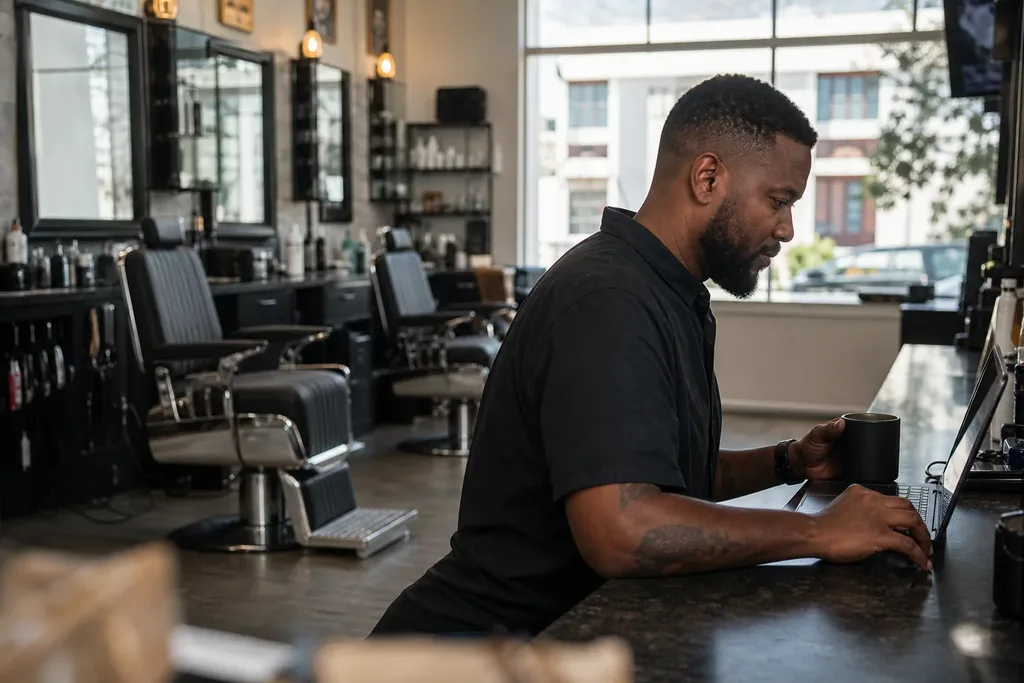
A barbershop owner reviewing the week's bookings on a laptop at the back counter of his small shop before opening

Owners of small shops get sold software designed for somebody else. The demos show a twelve chair flagship with a front desk, a retail wall and a payroll run every other Friday. A three chair shop with one owner who also cuts all day has a shorter list of problems: barbers who each need a booking link, walk-ins that collide with online bookings, no-shows on Saturday, and a monthly bill that grows every time someone new takes a chair.

This guide is for the owner of a shop with two to eight barbers who is choosing software this month. We compare how each bill is built and not the numbers, because every vendor changes its prices and runs promotions. Check the pricing page of whichever you pick on the day you sign.

What does barber shop management software actually need to do?

Barber shop management software for a small shop needs to do four jobs well: give every barber a personal booking link, show the whole floor on one calendar, keep walk-ins and online bookings from landing in the same chair, and tell the owner what the week sold. Payments, payroll and inventory are a second layer that many small shops already cover elsewhere.

That split matters because it decides what you pay for. Full suites bundle both layers and price accordingly, often per barber. A shop that already takes cards on a reader it owns and pays its barbers on commission through a bookkeeper is paying twice for the second layer. A shop that wants one login for everything, including tips and payouts, is better served by a suite even at a higher bill.

Barber shop software compared by how the bill grows

SoftwareHow the bill is builtNew clientsBest for a small shop that
BooksyOne subscription plus a monthly fee for each added barber, no cap; Boost takes a one-time commission on new clients while it is onBooksy consumer appGets a real share of new heads from the app
theCutFree plan and a paid Pro plan, charged per barber; free plan carries a fee on clients found through in-app discoverytheCut discovery appWants a barber-only app its clients already know
SquireTiers priced per location; higher tiers add commission and rent collection, loyalty, gift cards and inventoryYour branded bookingWants payments, payouts and booth rent in one system
Square AppointmentsAn entry tier without a monthly fee, paid tiers above it, processing on every card paymentYour booking site plus Square GoAlready runs the counter on a Square reader
VagaroPriced by number of bookable calendars, marketing and branded app as add-ons, a fee on a first marketplace bookingVagaro marketplaceWants payroll and retail stock in the same account
Hairdressers.ioFlat: $49 for one chair, $89 for up to 8 barbers, $199 for up to 25 across locations; 0% commissionEach barber's link plus a city directory listingWants booking and the floor calendar on a bill that does not move when it hires

What is the best software for a small barber shop?

The best software for a small barber shop is the one whose bill still makes sense with the number of barbers you expect next summer. Count your chairs, decide whether you need the app to bring strangers in, and decide whether payments must live in the same login. Those three answers narrow six products to one or two.

You need the app to fill chairs. A new shop on a side street with no following needs discovery more than anything. Booksy and theCut both run consumer apps that people genuinely use to find a fade nearby. Accept that you will pay per barber, per new client or both, and treat it as an acquisition cost while the book fills. If price is the deciding factor, cheapest barbershop booking software works out the yearly total for each billing model.

You want one system for money. If you run commission splits, collect booth rent from renters and sell product, Squire's higher tiers are built for exactly that, and Vagaro covers payroll and stock with add-ons. Both are more software than a three chair shop needs if your bookkeeper already handles payouts.

Your book is mostly regulars. This is most established small shops. The regulars already have their barber's number or link, and the shop does not need to pay for discovery it rarely uses. A flat shop price with good booking and a decent floor calendar is usually the smaller number at the end of the year. That is the case Hairdressers.io is built for.

How walk-ins and online bookings share the same chairs

This is the problem that breaks booking software in barbershops. A walk-in sits down in chair two at 11:05, and at 11:10 the booking page happily accepts an online client for 11:15 in the same chair. Twenty minutes later there are two angry people and a barber apologizing.

Software solves it in one of two ways. Some shops run a separate check-in or queue app next to their booking tool, which works but means two systems that do not talk to each other. The cleaner way is a single calendar where the counter types the walk-in into the day for the barber taking them, and the booking page stops offering that time instantly. Hairdressers.io works the second way: a walk-in added at the counter is confirmed on the spot, and every online request is checked against the live day before it is accepted, so the same slot can never be given twice. It does not run a check-in queue screen, so a shop that is mostly walk-ins with a queue out the door should look at Squire's waitlist or a dedicated queue app.

Per-barber pricing and what it costs a growing shop

Most small shops grow one chair at a time. A part-timer takes Saturdays, a renter moves in on Thursdays, an apprentice starts taking clients. On software billed per barber, each of those adds a monthly line, and a Saturday-only barber usually costs the same as a full-timer. On software billed by calendar, the effect is similar until a cap.

Run the sum over a year for the shop you will be, not the shop you are. Twelve subscriptions, plus the per-barber fees for everyone you expect on the floor, plus whatever the app keeps from new clients, plus processing if the app forces its own. Then compare that with a flat shop band. For a shop going from three to six barbers, the difference is often the price of a new chair. Hairdressers.io charges $89 a month for any shop of up to eight barbers, so hiring inside the band is a staffing decision, not a software one.

What a small shop owner should see every Monday

Good management software answers three questions without a spreadsheet: how much of each barber's week sold, what the no-shows cost, and where the new clients came from. Hairdressers.io shows occupancy per barber for this week against last, adds up the value of visits marked as no-shows at your own prices, and records the channel of every client's first visit, from the city directory, the shop link, a barber's own link, an import or a walk-in typed in by the shop.

Money in and out still needs a home. Most small shops pay barbers and file taxes through a bookkeeper, and if yours works in QuickBooks, a QuickBooks receipt scanner turns the pile of supply and product receipts into entries without anybody typing them in. That keeps the booking side simple and the books clean, without buying a suite to do both badly.

Where Hairdressers.io fits for a small shop

It is the booking and floor half of barber shop software on a flat price. Every barber gets a page with their services, real minutes and prices, their hours and days off, and a link for their bio. The shop sees all chairs on one day calendar on a fifteen minute grid, drags a booking to move it, blocks lunch or a closed Monday, and types in walk-ins. Online bookings arrive as requests the shop confirms with one reply, and clients get a private link to move or cancel inside your notice window. The shop page lists every barber, which is why many owners use it as their site; the barber website page shows what clients see.

It does not take card payments, run payroll, track commission, collect booth rent, sell product or send text reminders. A shop that needs any of those in the same login should buy a suite and pay for it. A shop that wants booking fixed on a bill that stays put from three barbers to eight can read the detail on the barber scheduling software page and see every plan on the pricing page.

Is Booksy good for a small barber shop?

Booksy is good for a small barber shop that still gets a meaningful share of new clients from its consumer app. Its bill grows with each barber you add and Boost charges on the new clients it sends, so for a shop of regulars that has stopped needing discovery it often costs more than a flat alternative. We went through the options for barbers leaving it in Booksy alternatives for barbers.

Do small barber shops need a POS system?

Not necessarily. A small shop needs to take cards, and a reader it already owns does that. A full POS earns its keep when you sell real retail, track stock or want tips and commission calculated at checkout. If your counter is a reader and a jar of pomade, keep the reader and choose booking software on its own merits. The barber-by-barber app comparison is in best booking app for barbers.

Whichever product you choose, decide on three numbers: barbers on the floor a year from now, the total yearly bill with the features you will actually switch on, and how many new clients a month you need from outside your current book. The right software is the one that looks best on all three, not the one with the longest feature list.

Read next

Booksy pricing for hair salons and what a team of five really pays in a year

Booksy looks cheap for one stylist and gets expensive for a team. Here is the subscription, the per-member fee, the Boost charge and card rates, worked out for 1, 5 and 8 stylists.

Best management software for a one location hair salon doing haircuts, color and styling

An established salon at one address does not need the software a ten-location group buys, and it has outgrown the app a solo stylist uses. Here is what a cut, color and styling salon actually needs, and how six options bill a team of four to ten.

Cheapest barbershop booking software and cheapest appointment software for barbers, by real yearly cost

The barber booking app with the lowest price on its pricing page is rarely the one that costs a shop the least by December. Here is how six options bill a two to eight chair barbershop, and the sum that tells you which one is actually cheapest.

Best booking software for booth renters who run their own book inside someone else's salon

A booth renter is a business of one inside a building someone else owns. The booking software has to be yours, not the salon's, and the bill has to make sense for one chair. Here is how six options compare for a stylist who pays rent every week.

Square Appointments alternatives for hair salons and stylists, sorted by the reason you are leaving

Most salons that leave Square Appointments are not unhappy with the card reader. They are unhappy with what sits behind the paid tiers, or with a calendar that books anyone into anything. Here is which alternative fits each reason.

Best software for a large hair salon with 10 to 25 stylists on a busy floor

A large salon does not need more features than a small one so much as different ones: a way to hand new clients to the right stylist, a bill that does not jump every time you hire, and records that survive staff turnover.

Salon booking apps and salon appointment apps compared for hair salon owners

Every salon booking app has two halves: the app your stylists run the day from, and whatever the client has to open to book. The second half decides who the client belongs to, and the bill decides what the app costs you once the salon grows.

Best software for hair salons and best salon software by salon size, from one chair to two locations

The best software for a hair salon is not one product. It is a short stack sized to your salon: booking and client records first, then payments, then payroll and marketing only when the team is big enough to need them. Here is what to buy at each size, and how each option bills.

Best hair salon booking system and best salon online booking system for a US salon

The best hair salon booking system is the one that books long color services correctly, keeps each stylist's hours apart and bills in a way that fits how your salon grows. Here are the systems US salons actually choose between, compared on exactly that.

Best booking app for barbers and best barber scheduling apps for a chair or a full shop

The best booking app for a barber depends on two things: whether you still need strangers to find you, and whether you are one chair or a shop. Here are the apps US barbers actually choose between, sorted by how each one bills.

Setmore competitors for hair salons, compared by how each one bills

Setmore is a general scheduler with a no-cost tier for up to four users and a Pro plan billed per user. Here are the competitors a US hair salon actually weighs against it, sorted by how each one charges and who each one fits.

Acuity Scheduling competitors for hair salons and stylists, compared by billing

Acuity bills by the number of calendars and has no consumer marketplace. Here are the competitors a US hair salon or booth renter actually weighs against it, sorted by how each one charges and who each one fits.

Vagaro competitors for hair salons, compared by how each one bills

Vagaro bills per bookable calendar up to a cap and sells features a la carte per location. Here are the competitors a US hair salon or barbershop actually weighs against it, sorted by how each one charges and who each one fits.

Booksy vs GlossGenius vs Square Appointments for hair salons and barbershops

Booksy is a booking app with a consumer marketplace attached. Square Appointments is a register with a calendar attached. That one difference decides most of the comparison for a hair salon or barbershop, and this article walks through the rest.

Fresha competitors for hair salons now that Fresha bills per team member

Fresha used to win on being free. Now every plan is paid and the Team plan is billed per bookable member, so salons are comparing again. Here are the competitors a US hair salon actually weighs, sorted by how each one bills.

GlossGenius competitors and the best GlossGenius alternatives for hairdressers, compared by what GlossGenius leaves out

GlossGenius is a polished booking and payments tool with no marketplace. Its competitors split into platforms that send new clients and tools that bill differently. Here is how to pick by the reason you are looking.

Booksy competitors and Booksy alternatives for hair salons whose team is growing

Most lists of Booksy competitors are company data or generic schedulers. A salon owner needs the other version: which platform to move to, sorted by the part of the Booksy bill that stopped making sense.

StyleSeat competitors for hair stylists, and which booking app to switch to by the reason you are leaving

Most lists of StyleSeat competitors are market share tables. A stylist needs the other version: which app to move to, sorted by why you want to leave StyleSeat in the first place.

Fresha vs Booksy and Booksy vs Fresha for salons on team pricing, new client fees and which salon each fits

Two marketplace booking apps with the same basic bargain: a consumer app that sends you strangers, and a charge on each stranger it sends. Where they differ is how the monthly bill grows with your team, and that decides which one a salon should buy.

Acuity vs Square Appointments for salons and Acuity Scheduling vs Square Appointments on cost, booking rules and new clients

A scheduler that plugs into a payment processor, against a payment processor that includes a scheduler. For a salon the choice comes down to what the bill counts, where your no-show protection lives, and whether either one puts a stranger in your chair.

Acuity vs Vagaro and Vagaro vs Acuity Scheduling for hair salons choosing booking software

Two products a salon owner almost always ends up choosing between, compared on the only three things that change the decision: what the bill scales on, whether either one finds you clients, and what you are locked into afterwards.

Scheduling apps for hairstylists and the booking app or appointment app for hairdressers you own

StyleSeat, Booksy, GlossGenius, Square, Vagaro, Setmore, Acuity and a flat fee, compared from the stylist's chair: what a new client costs you, whose account it is, and what you take with you when you move.

Best salon software for small salon owners, with the bill for two to six chairs added up properly

A small salon does not get a small bill by default. Booksy, Vagaro, GlossGenius, Square, Fresha and a flat banded fee, compared on what each one charges when you add a fourth chair or a Saturday stylist.

StyleSeat alternative for braiders, and what each booking site charges on an eight hour appointment

Braiders leave StyleSeat when the first-visit share on a $300 knotless install stops feeling like a finder's fee. Here is how Booksy, GlossGenius, Square, a loctician app and a flat fee handle a book built on six hour appointments.

Booksy alternatives for barbers and barbershops, what each one charges for and which fits your chair

Barbers leave Booksy for two reasons: the bill grows with every barber you add, and Boost charges on the new clients it sends. Here is how theCut, Squire, Square, GlossGenius and a flat fee handle both.

Square Appointments vs GlossGenius for hairstylists and salons on cost, card processing and new clients

One is beauty-only software with a flat processing rate and no marketplace. The other starts with no subscription fee, gates salon protections behind Plus, and lists you in an iPhone booking app. Here is which shape fits your salon.

GlossGenius vs Vagaro (Vagaro vs GlossGenius), which is the best salon software for your salon and how the two bills are built

One charges a flat rate that covers a team. The other charges per user and sells features separately, but owns a consumer marketplace. Here is how to tell which shape fits your salon before you commit.

Booksy vs StyleSeat (StyleSeat vs Booksy) and which pricing model costs an independent stylist less

Neither monthly fee is your real monthly cost. Here is the arithmetic that tells a booth renter which platform is cheaper at their volume, and the point where both stop being worth it.

Hair salon marketing strategies that actually fill chairs

Most salon marketing advice is a list of things to post. This is a list of things that change the number on your calendar, ordered by how cheaply they do it.

Hair salon promotion ideas that do not devalue your prices

A discount is the easiest promotion to run and the hardest to stop running. Here are the salon promotion ideas that add revenue instead of moving it.

How to get more clients as a hairstylist

Building a book from a rented chair is a different problem from marketing a salon. It is mostly about being findable, being bookable, and being specific.

Salon no show policy wording and how to enforce it

A no show policy is not a punishment. It is the sentence that lets you fill the slot instead of losing it. Here is how to write one people actually accept.

Get started

Get your chairs booked and your salon found

One flat monthly price. No commission on any booking, ever. It takes an email address to start.

Ready now? List your salon, $49 a month

0% commission · Your client list stays yours · No card required to sign up