Cheapest barbershop booking software and cheapest appointment software for barbers, by real yearly cost
Short answer
The cheapest barbershop booking software at sticker price is a no-monthly-fee tier such as Square Appointments' entry plan, or a capped free plan such as Setmore's or theCut's. Over a year, a shop with several barbers usually pays least on a plan that does not charge per barber or per new client. Hairdressers.io charges a flat $89 a month for up to eight barbers ($528 a year) with 0% commission, and $49 a month for a barber working alone.
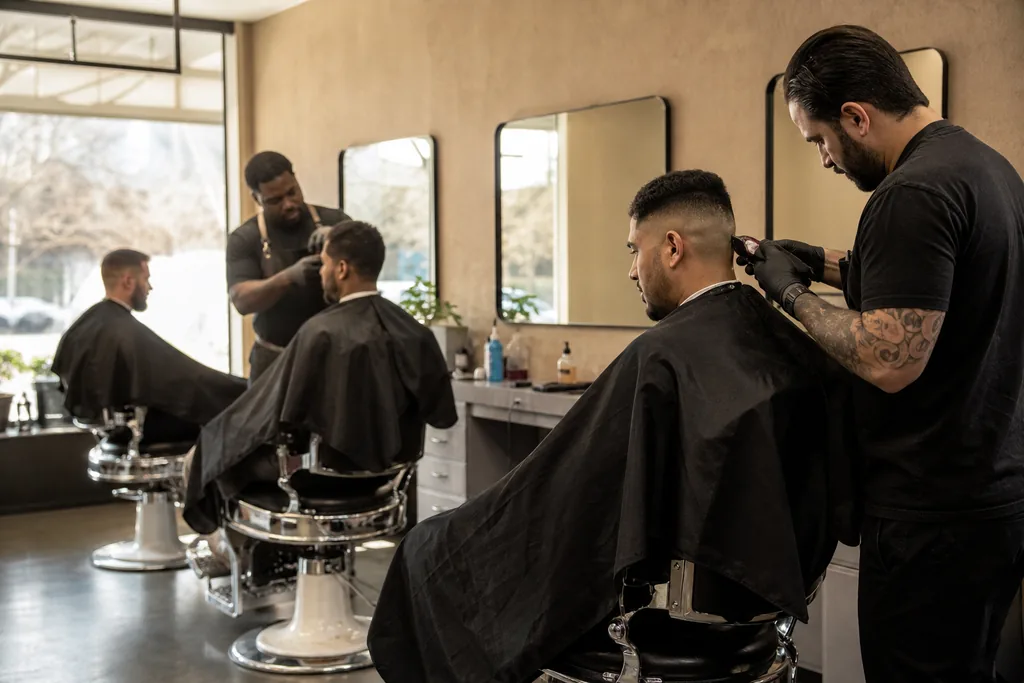
Barbershops shop for booking software on price more than almost anyone else in the hair business, and for a good reason. A cut is short, the ticket is small, and a shop with four chairs turns a lot of appointments for the money. A fee that looks tiny on one booking repeats hundreds of times a month. So "cheap" matters, and it is also where shops get caught out, because the cheapest plan on a pricing page is often priced to grow with the shop.
This guide is for an owner of a two to eight chair barbershop, or a barber working alone, who is picking booking software this month and wants the lowest real cost. We compare how each product builds its bill rather than quoting prices, because vendors change their numbers and promotions often. Check each pricing page on the day you sign up.
What is the cheapest barbershop booking software?
The cheapest barbershop booking software is the one with the smallest total at twelve months for your number of barbers. For a solo barber who takes every payment by card, a no-monthly-fee tier can be cheapest. For a shop of three or more barbers with mostly regulars, a flat shop plan without per-barber seats or new-client fees usually costs least once the year is added up.
The reason is that barbershop software earns its money in one of four places: a seat for each barber, a percentage of card payments, a fee on new clients from its consumer app, or a paid tier that unlocks the features a busy shop needs. Find which one your shortlist uses and you know how your bill will move.
Barbershop booking software compared by how the bill grows
| Software | How the bill is built | What grows the bill | Cheapest for a shop that |
|---|---|---|---|
| Square Appointments | An entry tier with no monthly fee, paid tiers per location above it, processing on every card payment | Card sales, and moving to a paid tier for no-show fees, a waitlist or multi-staff bookings | Already runs its register on Square and needs only the basics |
| Setmore | A free tier with caps on users and monthly appointments, then a paid plan per user | Each barber once you pass the free caps | Is one or two barbers with a light book |
| theCut | A free plan and a paid Pro plan charged per barber; on the free plan new clients from in-app discovery carry a per-client fee | Barbers on Pro, or new discovery clients on the free plan, plus processing on in-app payments | Wants a barber discovery app and takes payments in it |
| Booksy | One subscription, a monthly fee for each added team member with no cap, a one-time commission on new clients while Boost is on | Every barber you add and every Boost client | Needs the Booksy app to bring in new heads |
| Squire | Tiers priced per location; higher tiers add marketing, commission and rent collection, loyalty and a branded app | Moving up a tier for back-office features | Wants payroll splits, rent collection and a branded app |
| Hairdressers.io | Flat $49 a month for one barber, $89 for up to eight, 0% commission, no processing | Nothing inside the band of eight | Has a book of regulars plus walk-ins and is hiring |
The real yearly cost of a four chair barbershop
Work it out with numbers from your own shop, not a vendor's example. You need four figures from last month: the number of barbers who take bookings (part-timers included), the total card sales, the number of brand new clients and where each one came from, and any text or add-on charges on the current invoice.
- Seats. If the plan charges per barber, multiply the per-barber line by your headcount next spring, not today's.
- Processing. If the software takes the card payment, multiply a year of card sales by the processing rate. On a busy four chair shop this is often the biggest line of all.
- New clients. Multiply new clients from the app by the fee or share per client, then by twelve.
- Tiers and add-ons. Add the paid tier you would need for no-show fees, waitlists or texts.
On Hairdressers.io the sum is short: a four chair shop pays $89 a month or $528 a year, and hiring a fifth, sixth or seventh barber does not change it. There is no processing line because we do not take the card payment; you keep the reader you already use. If you keep the shop's books yourself and want to catch a software bill that quietly climbs, you can get an alert when a recurring software charge goes up instead of finding it on the year-end statement.
Are no-monthly-fee barber apps really cheaper?
No-monthly-fee barber apps are cheaper only while the shop is small and quiet. They earn from card processing, from fees on new clients or from upgrades, so the cost rises with your sales and your headcount. A solo barber with a light book can stay on one for years. A shop of four with a full Saturday usually pays more on a no-fee plan than on a flat one.
Look at what the free plan leaves out, too. No-show fees, waitlists and booking two barbers on one appointment are often paid features, and a barbershop that takes walk-ins needs a calendar where a walk-in blocks the chair so an online booking cannot take it.
What is the cheapest appointment software for barbers working alone?
For a barber working alone, the cheapest appointment software is a single-chair plan with no fee on new clients and no cut of payments, or a capped free tier if the book is very light. Hairdressers.io is $49 a month for one barber, or $288 a year, which is $24 a month, with a booking link, calendar, client cards and a city directory listing included.
A barber who rents a chair should also check who owns the client list. A list inside the shop owner's account stays with the shop when you leave. The best booking software for booth renters guide covers that question for a rented chair.
Walk-ins on a cheap system
The cheapest software is no bargain if walk-ins and online bookings collide. On Hairdressers.io the shop enters a walk-in or phone booking on the calendar, it is confirmed at once and the slot disappears from the booking page, so nobody online grabs the chair you just sat someone in. The day view shows every barber side by side on a 15 minute grid, and you drag a booking to move it with an email to the client.
Each service carries its real length and cleanup buffer, so a skin fade and beard is not offered as a 30 minute slot. Every online booking reaches you as a request you confirm with one email reply. The reports show how full the week was against last week and what no-shows cost. The shop side of all this is on the barber shop booking software page.
What cheap barbershop software usually leaves out
Being honest about our own gaps: Hairdressers.io has no card reader or checkout, no payroll or commission splits, no booth rent collection, no inventory, no gift cards, no card on file and no text reminders. Reminders go by email two days ahead and on the morning. If you need payroll splits and a branded app, a shop suite such as Squire does that at a higher tier. If you need a consumer app sending strangers, Booksy or theCut does that for a fee on new clients.
What you get instead is a bill that stays flat while the shop gets busier. For a shop deciding between full management suites, best management software for small barber shops compares them on the back-office side.
How to switch without paying for two systems for long
- Export first. Download clients, visit history and notes while the old account is active.
- Import on day one. Upload the spreadsheet on any paid plan so regulars are on the calendar from the start.
- Run both for two weeks. Leave booked appointments where they are and give clients the new link for anything new.
- Cancel at the end of a billing cycle. Check the old plan's notice period so you do not pay another month.
The cheapest barbershop booking software is the one whose bill you can predict at next year's headcount. Write the four lines out for your shortlist, and pick the smallest total. Plans and yearly prices are on the pricing page.